
From Russia With Love
The case for US-China scientific collaboration

The United States is at risk of falling behind China in scientific leadership. It hasn’t happened yet, but it is a distinct possibility during the next decade. That’s the verdict of the Australian Strategic Policy Institute whose “Critical Technology Tracker” now ranks China first in 66 of 74 technologies. That is also a conclusion that can be reached by an assessment of prospective trends in US-China basic research, the seed corn of innovation. Meanwhile, President Trump, who just fired all 22 members of the governing board of the National Science Foundation, is likely to stay true to his earlier form and replace the NSF Board with non-expert sycophants.
Science will shape the future of humankind. This is a global statement, not directed to the one nation which might prevail in a worldwide science race. We are all in this together and the goal should be one of collaboration, not single-nation dominance. Is there any possibility that might ever happen with the US and China?
This question may seem far-fetched, especially today. But there is a long history to US-China scientific collaboration. In 1979, on the occasion of his celebrated visit to the US, Deng Xiaoping and US President Jimmy Carter signed “The US-China Science Technology Agreement (UCSTA).” It was the first accord after the establishment of formal diplomatic relations between the two countries and has been the anchor of joint scientific investigation between the US and China ever since.
Unfortunately, at the same time the US-China relationship entered a period conflict escalation, America’s commitment to the UCSTA came under political pressure. In 2023 and 2024, bipartisan animosity on the US side required two six-month stopgap funding actions by the US Congress, eventually followed by a five-year extension of a significantly watered-down agreement signed by both countries on December 31, 2024. The current version is basically a government-to-government UCSTA that excludes collaboration between private companies, universities, and new emerging technologies such as AI.
The US and China should and can do much better than that. There is an important precedent for scientific collaboration between adversarial nations — US-Soviet, now US-Russia, joint space exploration. Starting with the Apolo-Soyuz docking in 1975, two conflicted nations, during and after the Cold War, built a lasting partnership for space exploration that culminated with their joint management of the International Space Station (ISS). From construction over 1998 to 2009, to ongoing missions of scientific exploration, this has been a shared project from the start. During the US space shuttle hiatus of 2011-20, Russian Soyuz rockets ferried US astronauts to the ISS. Since its full operational inception in 2009, the ISS has always been staffed jointly with US astronauts and Russian cosmonauts.
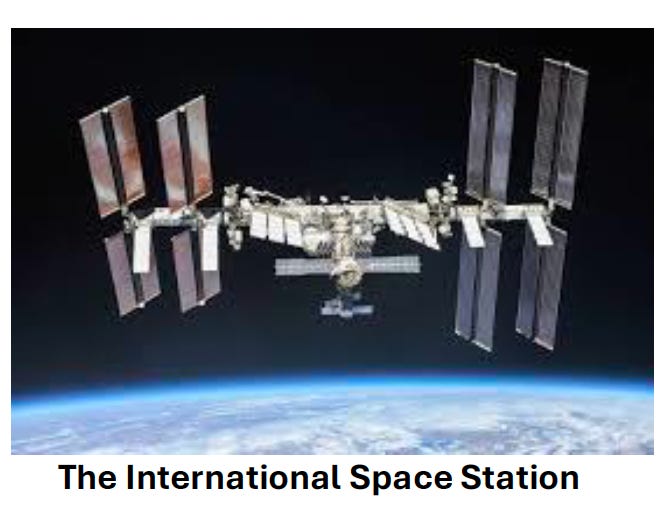
This collaboration in space exploration, literally on the frontier of scientific and physical breakthroughs, occurred despite deep-rooted pressures of US-Soviet/ Russia conflict escalation. Comparable to the Deng-Carter science agreement of 1979, the origins of Soviet/ US collaboration were established in the early days of détente in 1972, through the “Agreement Concerning Cooperation in the Exploration and Use of Outer Space for Peaceful Purposes” that initially committed the US and the former Soviet Union to the joint Apollo-Soyuz project. More than fifty years later and in the face of the outright disintegration of the USSR, followed by a collapse in the US-Russia relationship after invasions of Crimea (2014) and Ukraine (2022), ISS collaboration is still in place.
The ISS cooperation model between the United States and USSR/ Russia worked for one key reason: the project was designed for codependence, both in physical and human terms. That is true of the jointly coordinated efforts of the construction phase of the space station but also of the inseparable requirements of day-to-day operability — for example, splitting the tasks of thruster propulsion (Russia) and power sourcing via wing-like solar panels (US); in essence, one side couldn’t work without the other, underscoring a forced physical interdependence. The human aspect of the ISS project was equally codependent for support and management, as well as crews.
How might the ISS experience be translated into a model of US-China science collaboration?
An emphasis on physical interdependence would be especially important. Just as Russia or the United States could not build or operate the ISS alone, the broad case for partnered US-China scientific investigation is compelling. That is especially true in looking to a future in scientific applications that is likely to be dominated by large-scale endeavors such as artificial intelligence, quantum computing, and nuclear fusion. For massive projects such as these, cost and resource sharing is not only efficient but an important means to establish physical and financial linkages between scientific communities in the US and China.
Operational integration at the working level, one of the greatest strengths of the ISS, was able to supersede the national identity of both the United States and the Soviet Union. Mission support and crews are good friends and share the collective identity of “the ISS team.” As a result, operational integration was free of nationalistic biases, nurturing the repetitive nature of a process-based commitment to collaboration. That provided an important counterweight to the political economy of conflict between the US and the USSR/ Russia, and there is good reason to believe it can do the same for the United States and China. Enhanced people-to-people exchange, especially at the student level, would be an important building block to such efforts.
Increased break-up costs that bind partners together both intellectually and financially, add to the durability of collaborative scientific research. The ISS kept going even after the termination of the US space shuttle program in 2011. For eight years until 2020, the US preferred to ferry its astronauts to the space station in a Soyuz rocket rather than pull out of the joint project. The sunk costs of commitment were too high to consider other, more draconian, options like suspension, or cancellation. The same could apply to the US and China if they were to set up collaborative programs to tackle the mega-scientific projects noted above and establish joint labs and research centers under the spirit of renewed commitment to university and private sector collaboration.
Revising the now diluted US-China Science and Technology Agreement (USCSTA) should have a high priority. First, a new provision aimed at protecting academics of any ethnic or national origin from being detained or subjected to exit bans (i.e., as previously stipulated by the China Initiative). Second, the need to ensure reciprocal treatment regarding data security in the aftermath of China’s 2021 enactment of a Data Security Law. Third, developing new tools of technology interdependence, including, but not limited to, joint infrastructure, cross-credentialed staffing pipelines, and shared datasets. Fourth, re-establishing university-to university and private sector collaboration in both countries, as noted above. Fifth, a correction of USCSTA’s major design flaws; the agreement is nonbinding and must be renewed every five years, which exposes collaboration to the short-term whims of the political cycle, impairing the continuity of commitment.
All in all, there is both good and bad news on the possibilities of renewed scientific engagement between the United States and China. The good news is that, following the Soviet-US model, a foundational US-China framework is already in place in the form of “The U.S.-China Science and Technology Agreement of 1979.” The bad news is that the politics of conflict escalation have gotten in the way. If we can put aside conflict as we have done with the Soviet/ Russia/ US joint ISS program, we can certainly do the same with Sino-American scientific collaboration. For the sake of humankind.
Yes indeed, “for the sake of humankind.” The benefits are obvious, but I worry about two things. First, the bonds of trust have been eroded by all involved and particularly by the Trump administration, which seems to approach everything from the perspectives of arrogance and contempt for adversaries, however defined. The pointless hostilities between the U.S. and Iran is the most recent demonstration of the failure of this approach. Have we learned anything? Most likely not. Second, China may, quite correctly, view itself as pulling ahead of the U.S. and believe we could not pull our weight in a joint effort. Why throw a rope to a competitor who seeks to contain you? Difficult times.
Two technological blocs may be more likely to emerge than the shared “space station model” that Stephen hopes for.
I very much agree with Stephen’s broader instinct: scientific cooperation between the United States and China remains deeply valuable, not only for both countries, but for the world. His International Space Station analogy is also useful because it reminds us that even rival powers can sometimes preserve cooperation when the institutional design creates enough mutual dependence.
My concern is that today’s U.S.-China technology relationship may have already moved beyond the conditions that made that kind of model possible.
The old structure of U.S.-China science and technology cooperation was built in an era when China was still largely a technology recipient, a source of talent, and a destination for industrial offshoring. That world has changed. China is now one of the central nodes of global scientific production, engineering diffusion, and industrial-scale deployment. The ASPI report showing China leading in 66 of 74 critical technologies is not a complete measure of technological power, but it does capture a major shift: the United States can no longer understand China merely as a follower in the global technology system.
In many fields, the United States increasingly needs access to Chinese scientists, Chinese data, Chinese engineering sites, Chinese supply chains, and China’s speed of industrial iteration. But the American political system seems increasingly unable to accept that dependence. Instead, it often redefines that dependence as a security risk.
This is where the International Space Station analogy may become harder to apply. The ISS was a bounded scientific and engineering project with high sunk costs and clear operational interdependence. But AI, semiconductors, electric vehicles, batteries, robotics, aerospace, biotechnology, and digital infrastructure are not isolated scientific projects. They are also industrial platforms, military-relevant capabilities, supply-chain systems, and sources of economic power.
As the boundary of national security keeps expanding, scientific cooperation is no longer treated as an exception. It becomes one of the first things to be scrutinized. Semiconductors are national security. AI is national security. EV software is national security. Battery supply chains are national security. Data flows are national security. Even university cooperation can be reframed as a technology-transfer risk.
So the issue is not that U.S.-China cooperation is impossible. There is still enormous room for cooperation in basic science, climate, public health, agriculture, energy, and global governance. The deeper problem is that Washington’s political direction is moving toward tighter controls, narrower cooperation channels, and broader securitization of technology relations.
China may still prefer cooperation in many areas, but when key technology channels are continuously restricted, Beijing will also feel compelled to build countermeasures and reciprocal deterrence. In that sense, China’s export controls and other responses are less about rejecting cooperation than about avoiding unilateral vulnerability.
The more likely future, in my view, is not total separation. It is the emergence of two technology ecosystems that are increasingly independent, yet still partially overlapping.
This structure may develop in four layers.
The first layer is hard decoupling: advanced semiconductors, frontier AI computing, military-related quantum technologies, parts of satellite and space technology, critical industrial software, and high-end equipment.
The second layer is limited overlap: basic science, public health, climate research, agriculture, parts of energy technology, and non-sensitive research data.
The third layer is competitive coexistence: EVs, batteries, solar, wind, robotics, industrial internet, AI applications, and digital infrastructure, where both sides build their own standards, supply chains, and platforms while competing globally.
The fourth layer is gray-zone interdependence: open-source models, scientific papers, third-country supply chains, multinational R&D networks, Chinese scientists abroad, and multilateral institutions.
Stephen’s cooperation model is morally and intellectually appealing. But the political economy of technology competition now seems to be pushing the United States and China toward partial technological bifurcation rather than a shared scientific infrastructure.