
The Case for a US-China Bilateral Investment Treaty
The Economist: May 7, 2026

Jointly authored by Max Baucus and Stephen Roach and published by invitation of The Economist under the title, “The pact that could help America and China repair relations.”
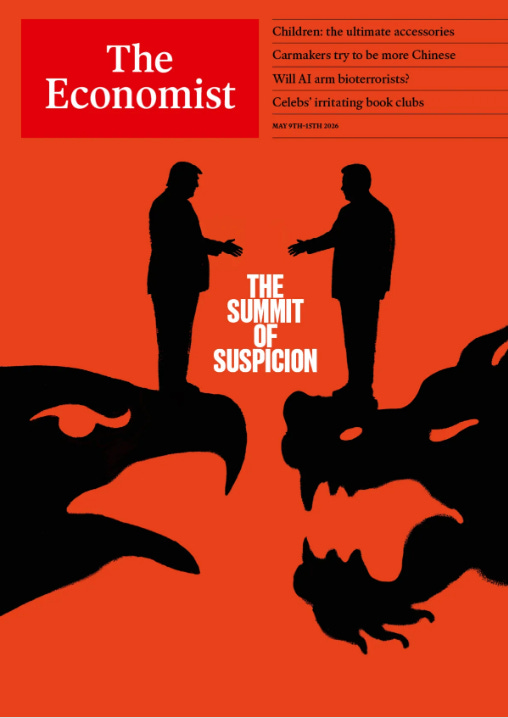
THE LONG-AWAITED summit between Donald Trump and Xi Jinping finally appears to be at hand. After having been cancelled once and now reset for May 14th-15th in Beijing, the meeting presents the two leaders with a great opportunity to repair the damage from a protracted Sino-American conflict. Their last meeting, in South Korea in October 2025, produced a slight easing of tensions but no breakthrough. We believe that the upcoming summit opens the door for a powerful initiative: a joint endorsement by both leaders of a Bilateral Investment Treaty.
A BIT, as it is commonly known, is an agreement between two countries establishing the terms and conditions for cross-border private investment. These pacts have proliferated over the past half-century, and more than 2,200 are now in force; America has 40 and China 110, more than any other country.
The idea behind BITs is to spur growth by lowering investment barriers. Unlike Mr Trump’s misplaced fixation on bilateral trade imbalances, where one country’s success is viewed as a zero-sum threat to the other, a US-China BIT has the potential to stimulate capital formation, employment, income and consumption in both countries.
In late 2016, after nearly a decade of negotiations, agreement on a BIT between America and China was more than 90% complete, according to then US Trade Representative Michael Froman. Following the first election of Mr Trump in November 2016, however, negotiations were halted, never to resume, even during the Biden administration.
For America—whose BIT programme dates back to the Reagan presidency of the 1980s—these treaties have played an important role in establishing negotiating leverage with trade and investment partners. America’s 40 operational BITs contain a wide range of bespoke features, including “side issues” that fit the unique characteristics of each partnership and serve American interests: special rules for intellectual-property investment (Poland), foreign-exchange reserves (Egypt), local-content requirements (Turkey), government procurement practices (Uruguay), and so on.
A similarly tailored approach could be taken with China. American negotiators have long pushed for market-opening initiatives such as transparent licensing, intellectual-property protection and improved labour standards. The alleged unfair use of government subsidies by China’s state-owned enterprises could also be addressed in a new BIT.
Crucially, this works both ways. China has its concerns about US government subsidies, exacerbated by America’s newfound penchant for industrial policy. For both countries, clarifying dual-use (military-civilian) technology applications would be another high priority in BIT negotiations.
A BIT is a sensible way for countries to come to workable arrangements on “sensitive” sectors they are reluctant to expose to cross-border investment. China maintains a “negative list” that includes, among others, defence, rare earths, genetics, nuclear power and education. Though America does not maintain a formal negative list, it does have a national-security review process, known as CFIUS. Also, it has expanded its “entity list” to restrict Chinese companies associated with surveillance, human-rights abuses and weapons of mass destruction, as well as limiting Chinese access to advanced semiconductors, other AI-related activities, biotech and sensitive communications technology.
These exclusionary lists offer a way for countries to reach broad agreement on a BIT without getting tripped up on individual industries they choose to protect. They were a stumbling block in the final negotiations on a Sino-American deal in 2015-16. But they can also be an opportunity, if both sides treat them as starting points to negotiate future reductions in their respective lists. That could turn the BIT into a dynamic agreement, modifiable over time.
Just as important, America and China could use a BIT to address the thorny issue of forced technology transfer. American and other multinational companies have typically been required to invest in China through joint ventures with local firms, which have usually got more out of the arrangement through transferred technology and know-how than their international partners have received through market access and extra revenues. Eliminating ownership caps on direct investments by American and Chinese multinationals would do away with the need for joint ventures, which have stymied cross-border acquisitions in both countries. Solely owned Chinese and American tech firms could be big beneficiaries of such a change, not least in advanced semiconductors, the new battleground in AI. Any technology transfers they might undertake would still need to comply with BIT protocols that have been negotiated to manage the shared priorities of AI security, privacy and competition.
In America the politics of pushing through a BIT are tricky. Approval of any treaty requires two-thirds support in the Senate—unlikely, especially with China, in the current hyper-partisan climate. But there may be a way around this: rebranding the effort as a “congressional-executive agreement”, like those that framed NAFTA and its successor, USMCA. Such accords can be passed with a simple majority in both houses of Congress.
Going back to the negotiating table on the stalled Sino-American BIT would be a solid first step in rebuilding mutual trust. Both leaders could tout it as being pro-growth. Investment treaties are typically of interest only to business executives and policy wonks. But this one, rekindled, could transform the upcoming summit in Beijing from a placeholder event into one that the world’s two most powerful men can legitimately celebrate as a major milestone.
Max Baucus was a United States senator from 1978 to 2014 and America’s ambassador to China from 2014 to 2017.
Steve, you’re stuck in the 20th century. The USA is no longer treaty-capable. The ROW has moved on.
We can only hope, but I fear the Trump administration lacks the temperament and patience for the detailed analysis and extended effort which complex negotiations and agreements require. Trump craves bold announcements brought forth by little more than his presence and self-proclaimed mastery of the deal. Good luck with that. While I cannot speak with any certainty with respect Xi Jinping I suspect he does not trust the U.S. government, has considerable confidence in himself and China’s ascendancy, expects and values detailed analysis, and, above all, has infinite patience compared to Trump. As always, thank you for your valuable work.